
Your blog is ranking on the first page of Google. Maybe you are ranking #3 for an important keyword. Maybe #5. Maybe you even have a few posts sitting at #1.
But then you search the same topic on Google and look at the AI Overviews. Your page isn’t there. A competitor is there. Another website is being cited.
- And you start thinking, “What am I missing?”
I had the same question. I was already working with SEO, so I understood how to get a page ranking. But when I started looking into AI search, I kept seeing one word that I didn’t fully understand: RAG
RAG (Retrieval-Augmented Generation)
I first saw the word while looking at a job description. I knew it had something to do with AI and retrieval, but that explanation didn’t really tell me what was happening behind the scenes.
So I started researching. I read about retrieval, AI search, how information is selected, how AI generates answers, and how sources are used. And eventually, I got something.
It explained a problem I had already faced with my own blog.
I had some blog posts ranking on the first page of Google, but I couldn’t understand why they weren’t showing up in AI Overviews.
When I researched how RAG works, I finally connected the two things. My SEO was working, but my content wasn’t necessarily being retrieved for the AI answer.
That changed how I looked at AI search. Because
- Maybe your problem isn’t that your SEO is bad.
- Maybe your content is simply invisible at the retrieval stage.
And that’s what we’re going to look at here. So let’s get started,
TL;DR – Google Rankings vs AI Overviews
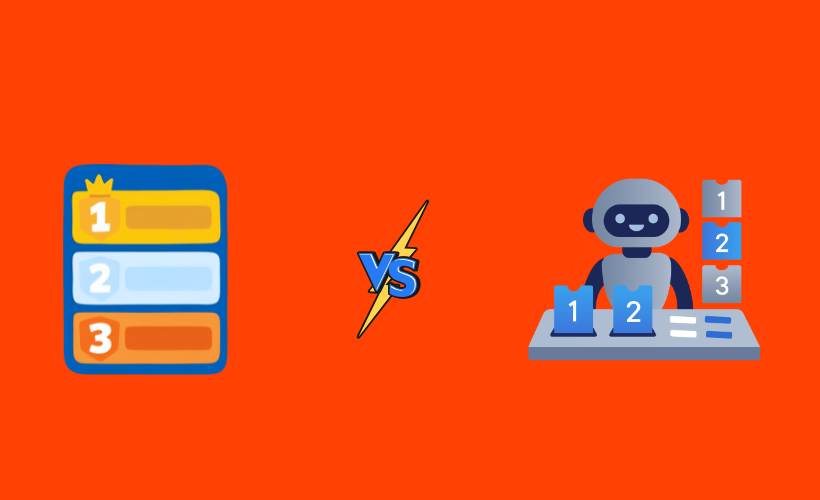
- Ranking on page one of Google doesn’t guarantee that your content will appear in AI Overviews.
- AI search uses retrieval to find useful information before generating an answer.
- Your SEO can be fine while your content is still missing from the retrieval process.
- Check the pages that get cited and compare their content, structure, and answers with yours.
- Keep your content clear, useful, well-structured, and focused on answering the searcher’s question.
- Final Verdict: Use the ZeroRank AI tool to track your competitors and your visibility across AI platforms to find the gap.
The Problem: Your SEO is Fine, But AI Overview Still Doesn’t Use Your Content

Let’s say you rank #2 for a keyword. You have good content. Your page is indexed. Google understands the topic. People can find you in the regular search results.
- So why would Google show another website in the AI Overview?
This is where things get interesting. The AI Overview isn’t simply saying:
“Let’s take the top three ot ten Google results and make an answer.”
There is more happening in between. The system needs to understand the search, find useful information, and then use that information to create an answer.
That process of finding the information is the part I was missing.
So, What Is RAG Actually Doing?
When I first read the definition of RAG, it sounded complicated. But you can think about it very simply.
RAG means the AI retrieves information from outside sources and uses that information to help answer the question.
So imagine someone searches:
- What is the best project management software for remote teams?
The system doesn’t just look at which website ranks #1. It needs to find information that can help answer that specific question. The basic process looks something like this:
- You search → The system understands the query → It retrieves relevant information → It uses that information to generate the answer → Sources can be shown
And that middle part is where your content can either be found or missed.
Your Google Ranking Doesn’t Tell the Whole Story
This was the part that finally made sense to me. A Google ranking tells you that your page is performing well in traditional search.
But an AI Overview has another thing to do. It needs information that can help construct an answer. So you can have something like this:
| Website | Google Ranking | AI Overview |
|---|---|---|
| Your website | #2 | Not cited |
| Competitor A | #6 | Cited |
| Competitor B | #9 | Cited |
At first, that seems strange.
- If your page ranks #2, why is the #6 page being used?
Because ranking position and retrieval aren’t the same thing. Your page might be the better result for the overall search.
But another page might contain a particular piece of information that is more useful for the answer being generated. That’s the part traditional SEO doesn’t show you.
What Happens During Retrieval?

Let’s make this easier with an example. Imagine you own a project management SaaS tool. You have a 2,500-word article about project management software for remote teams.
It covers:
- Task management
- Team collaboration
- Project planning
- Reporting
- Automation
- Pricing
- Different software options
That’s all useful. But suppose someone asks:
- What should remote teams look for in project management software?
Now the system needs information specifically related to that question. Maybe another article has a section like:
What Should Remote Teams Look for in Project Management Software?

Remote teams should look for task management, real-time collaboration, automation, and reporting features.
- That’s a very direct answer.
- The information is easy to understand.
- The context is clear.
- And the system can use that information when building an answer.
Your article may contain the same information. But if it’s buried inside a long paragraph, it may not be as useful for that particular retrieval task.
Here, I am not saying to give the exact heading and paragraph to come in the AI Overview when someone searches. What I am telling is to understand the context, give a direct answer, and then explain with real-life examples. Make it simple and structured.
This is why being on page one doesn’t automatically make you an AI Overview source.
No problem if your competitor is lazy and not doing anything to come into the RAG process; you will automatically beat them, but no one is sitting and thinking it’s okay not to dive into this process.
Everyone is trying hard; many are tracking brand mentions, share of voice, etc. using affordable GEO tools like Zero Rank AI or Otterly, and big companies are using Semrush to beat the competition.
So, in my opinion, it’s time to enter the GEO game; otherwise, you will be behind today or tomorrow.
Another Simple Example with CRO

Let’s say you run a conversion rate optimization (CRO) tool. You have an article explaining how businesses can improve their customer conversations. Someone searches:
- How can I improve customer conversations?
Your article may rank #4. But another page ranking #8 may have a section that directly explains the three most important methods, followed by supporting information and examples.
The second page may provide information that fits the question more directly. Again, this doesn’t mean the #8 page is better overall.
It simply shows why Google’s ranking position isn’t the only thing that matters when an AI system is building an answer.
RAG Doesn’t Mean You Need to Write for Robots
Now, this is where I don’t want you to go in the wrong direction.
- You don’t need to turn every article into a collection of robotic questions and one-line answers.
- You don’t need to repeat your keyword 50 times.
- And you don’t need to rewrite every page just because it isn’t appearing in AI Overview.
The basic idea is much simpler. Make your useful information easy to understand and easy to find.
- If you have an important answer, don’t hide it inside three paragraphs of introduction. (Give a direct answer and then support it)
- If you have original research, explain what it means. (As I have explained my research about RAG)
- If you make an important claim, support it. (Give Statistics)
- If you’re comparing products, make the differences clear. (Make a table)
- If you’re answering a question, actually answer it. (Give full context in a structured way)
Good content for people can also be useful for retrieval systems. So don’t underestimate problem-solving content at all. After a lot of things are done, Google can make new updates, and direct answers is not going to be retrieved lol.
So make always human friendly content that will win ultimately, and share that content in different relevant domains and social media or channels. Because only human-focused content can give you conversions and sales.
- Go with the flow, but keep humans as first priority
So What Should You Do With Pages That Already Rank?

This is where I am going to tell you: don’t throw away your existing SEO work. You already have something valuable if a page is ranking on page one.
Instead, look at the AI Overview for that same topic. See which pages are being cited. Then compare them with your page.
Ask yourself: What information are they providing that my page isn’t?
- Maybe their answer is more direct.
- Maybe they have original data.
- Maybe their content is more up to date.
- Maybe they explain a topic with better context.
- Maybe an important answer is easier to find on their page.
- Maybe they have information that your article doesn’t have at all.
Now you’re looking at the problem from a different angle. You’re not just asking:
- Why do they rank higher?
You’re asking:
- Why is their information being used?
That’s a much more useful question when your actual problem is AI visibility.
The Thing I Wish I Understood Earlier
When I first started looking into AI search, I thought the answer would be another SEO checklist.
- Add keywords.
- Build links.
- Improve content.
- Increase authority.
And yes, those things still matter. But they didn’t explain the problem I was seeing. I already had pages ranking.
What I didn’t understand was what happened after the search query was made and before the AI answer appeared.
Once I started understanding retrieval-augmented generation (RAG), the gap became much easier to explain. You can be visible in Google and still be missing from the information being used to build an AI answer.
That’s the part I want more website owners or SaaS founders to understand.
Your Next SEO Problem May Not Be Ranking

If your website is nowhere in Google, you have an SEO problem to solve. But if you’re already ranking on page one and competitors are appearing in AI Overviews, the problem may be different.
Your next question should be:
Why isn’t my content being retrieved?
- Look at the pages being cited.
- Study the information they provide.
- Find the gaps.
- Then improve your existing content where it actually matters.
You don’t have to start again. You just need to understand another part of the search process.
Conclusion
You can rank on page one of Google and still not appear in AI Overviews. Your SEO may be fine, but your content may not be getting picked up during the retrieval process.
Now you know why this happens. So instead of only checking your Google rankings, look at what information AI is using from other websites.
To understand your competitors better, check which pages they get mentioned and cited from. This can show you what type of information AI is finding useful.
You can use ZeroRank AI to track this for you. It is normally expensive, but there is currently a $69 lifetime deal, so grab it before the deal is gone and be more visible than your competitors.
** FAQs **
1. Why am I ranking on Google but not appearing in AI Overview?
Because Google ranking and AI retrieval are different parts of the search experience. A page can rank highly while another source is selected to support the AI-generated answer.
2. Does ranking #1 guarantee an AI Overview citation?
No. Ranking first in traditional search does not guarantee that your page will be selected as a source for an AI Overview.
3. What does RAG have to do with AI Overviews?
RAG refers to retrieving relevant external information and using it to help generate an answer. This retrieval step is one reason AI search cannot be treated as simply another version of the traditional Google results page.
4. Should I rewrite my article if it doesn’t appear in AI Overview?
Not necessarily. If your page already ranks well, first compare it with the sources appearing in the AI Overview. Look for differences in the information, structure, clarity, freshness, and supporting evidence.
5. Can traditional SEO still help with AI visibility?
Yes. Traditional SEO remains important for making content discoverable and relevant. But strong rankings alone don’t guarantee that your content will be selected as a source for an AI-generated answer.