
You’ve been working on your website with the right SEO for months.
- Publishing content.
- Building backlinks.
- Checking rankings every other day.
Yet something still feels off. Traffic isn’t growing the way you expected. Competitors keep showing up ahead of you. And despite all the effort, Google’s trust in your brand doesn’t seem to be increasing.
Now I am saying what nobody tells you: Nowadays, Google isn’t just watching your backlinks. It’s watching conversations.
And if nobody’s talking about your brand online, Google quietly decides it doesn’t trust you. That’s not an opinion.
According to statistics, Searches for brand mentions have gone up 194% in five years.
So if you’re not tracking who’s talking about your brand and what they’re saying, you’re losing ground to competitors who are.
In this guide, I’ll show you exactly how to track brand mentions, why they matter for SEO & GEO, and the tools you can use to monitor them effectively.
Let’s get started.
TL;DR – Track Your Brand Mention
- Backlinks alone aren’t enough anymore
- Brand mentions with or without a link influence how Google sees your authority
- You’ll learn: What they are → Why Google cares → 4 ways to track them → What to do next
- Even one unlinked mention on a high-authority site is a backlink opportunity waiting to happen
- Quick win: Start with Google Alert or UberSuggest’s AI Visibility, which costs $9 /month. See if it is actually beneficial for you, then take it for life.
What is a Brand Mention?
Most people think a brand mention means someone is linked to them. That’s not quite right. A brand mention is any time your brand name appears online. Linked or not.
There are two types:
- Tagged mentions: someone links to your website or tags your social profile. Google sees this clearly. It’s like a digital handshake.
- Untagged mentions: your name shows up in a Reddit thread, a blog post, a review site, but no link. No handshake. Just your name, floating out there.
Many businesses focus almost exclusively on tagged mentions. That’s a mistake.
Google has become increasingly better at understanding entities, brands, and context. An unlinked mention can still help Google understand that your brand is being discussed and recognized online.
But there’s something even more important than whether the mention includes a link – the sentiment behind it.
- What are people actually saying about your brand?
- Are they recommending you?
- Are they criticizing your product or service?
- Are they mentioning you as an industry authority?
- Or are they simply bringing up your name in passing?
Those details matter.
A steady stream of positive brand mentions can strengthen your reputation and visibility. On the other hand, a flood of negative discussions with no response from your team sends a very different brand signal.
That’s why tracking brand mentions isn’t just about finding links. It’s about understanding your brand’s reputation before Google and your customers do.
Why does Google Care about Brand Mentions?
One of the biggest SEO mistakes I still see is people treating backlinks as the only ranking signal that matters. Don’t get me wrong, backlinks are still important. They’ve been a core part of Google’s algorithm for years.
But SEO has evolved.
Andrew Holland, Director of SEO at JBH, recently said that brand mentions are the new backlinks, and I think that’s a perspective more marketers need to pay attention to.
Here’s why. Google’s goal isn’t just to count links. It’s to understand who and what it can trust.
That’s where the Knowledge Graph comes in. Think of it as Google’s database of entities – businesses, people, brands, products, and organizations.
When your brand is consistently mentioned across blogs, forums, industry websites, podcasts, and online communities, Google gathers more signals about who you are.
The more Google sees your brand being discussed, the easier it becomes to understand your authority within your industry.
I’ve seen websites with strong backlink profiles struggle to compete because their brand presence was practically invisible.
On the other hand, brands that people actively talk about often gain trust signals that go far beyond traditional link building.
That’s the shift many SEOs are missing. Google isn’t just evaluating websites anymore. It’s evaluating brands. So ask yourself this:
How much effort are you putting into earning backlinks, and how much effort are you putting into getting your brand mentioned?
If you’re only tracking links and ignoring brand visibility, you’re looking at only part of the picture. Backlinks help Google discover your website.
Brand mentions help Google understand and trust your brand. Today, successful SEO requires both.
4 Ways to Track Brand Mentions
Okay. Now you know what brand mentions are and why they matter. Let’s talk about how to actually track them.
I’m going to give you four methods. Some are automated, some are manual, and one is completely free. Pick what works for where you are right now.
Method 1: Use a Brand Monitoring Tool
You could manually search your brand name on Google every morning. But let’s be realistic.
Brand mentions happen around the clock across blogs, news sites, forums, review platforms, podcasts, and social media. By the time you’ve finished your morning coffee, you’ve probably already missed several conversations about your brand.
That’s why I recommend using a dedicated brand monitoring tool.
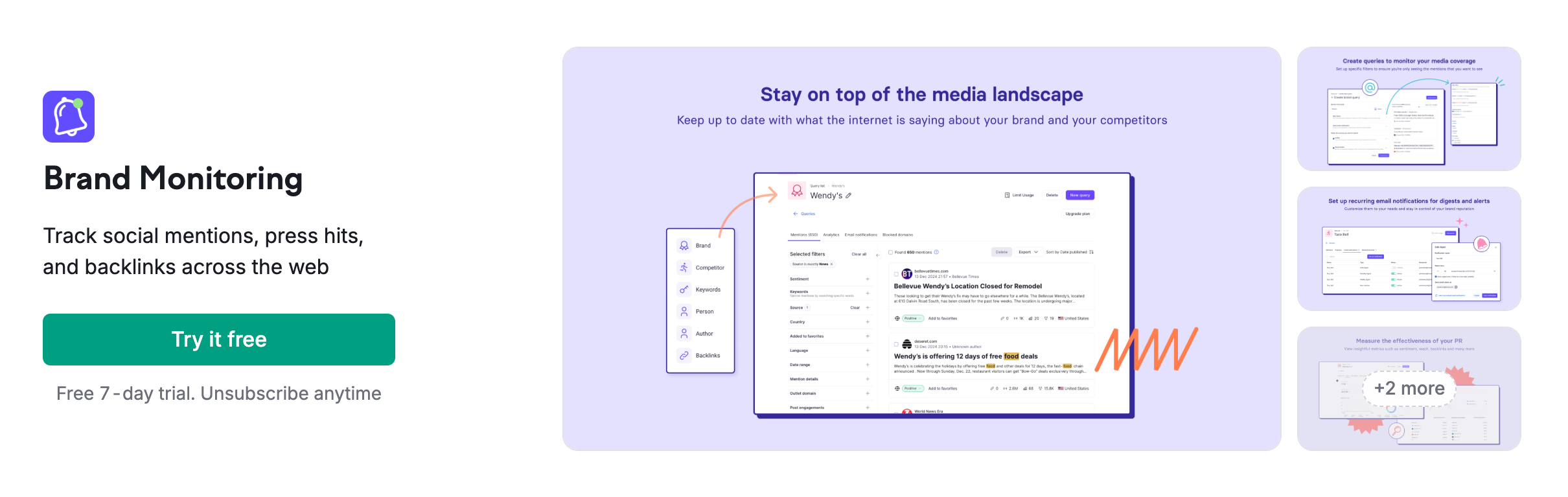
If you want an all-around tool, Semrush Brand Monitoring automates the entire process, tracking mentions across websites, blogs, forums, and social platforms such as X, Facebook, Instagram, TikTok, and YouTube.
The setup is straightforward:
- Enter your brand name.
- Set your filters (country, language, and date range).
- Choose the sources you want to monitor.
- Let the tool start tracking.
Within minutes, you’ll have a dashboard showing:
- Total brand mentions
- Positive, negative, and neutral sentiment
- Estimated reach
- Website traffic metrics
- Mention trends over time
You can also create alerts for negative mentions or sudden spikes in brand coverage, allowing you to respond before a small issue becomes a larger reputation problem.
But here’s the feature I find most valuable. The analytics section reveals which websites are already talking about your brand.
Many of those mentions won’t include a backlink. That’s where the opportunity is.
Instead of spending hours searching for link-building prospects, you’ll have a list of websites that already know your brand and have already mentioned you.
In many cases, turning those unlinked mentions into backlinks is far easier than starting a new outreach campaign from scratch.
A More Affordable Alternative: Ubersuggest AI Visibility
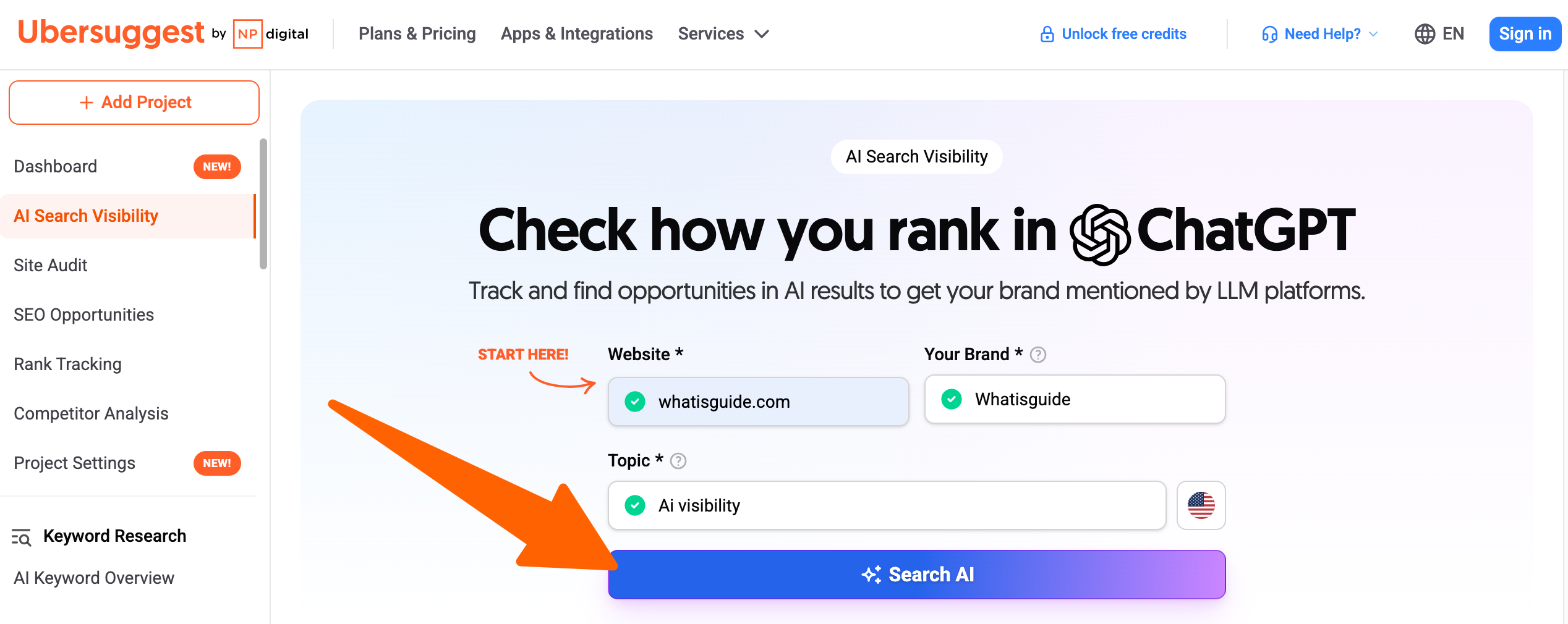
If you’re not ready to invest in a premium brand monitoring platform, Ubersuggest’s AI Visibility feature is a useful add-on to start.
What makes it different is that it doesn’t just track mentions across the web. It tracks whether AI platforms like ChatGPT and Gemini are mentioning your brand when users ask relevant questions.
Think about that for a second.
More people are researching products, services, and software directly inside ChatGPT & Gemini. If your competitors are being recommended but your brand isn’t, that’s a visibility problem most traditional SEO tools won’t show you.
The AI Visibility report can show:
- How often does your brand appear in AI-generated answers
- Which prompts trigger brand mentions
- Which competitors are being mentioned alongside you
- Visibility trends over time
- Your share of visibility compared to competing brands
- AI platforms where your brand is gaining or losing exposure
I’ve found this particularly useful because it gives you a completely different view of brand awareness.
- Traditional brand monitoring tells you what people are saying.
- AI Visibility tells you whether AI systems are talking about your brand at all.
And that matters because AI search engines don’t simply rank pages. They generate recommendations based on the information they find across websites, reviews, discussions, and other third-party sources.
My recommendation
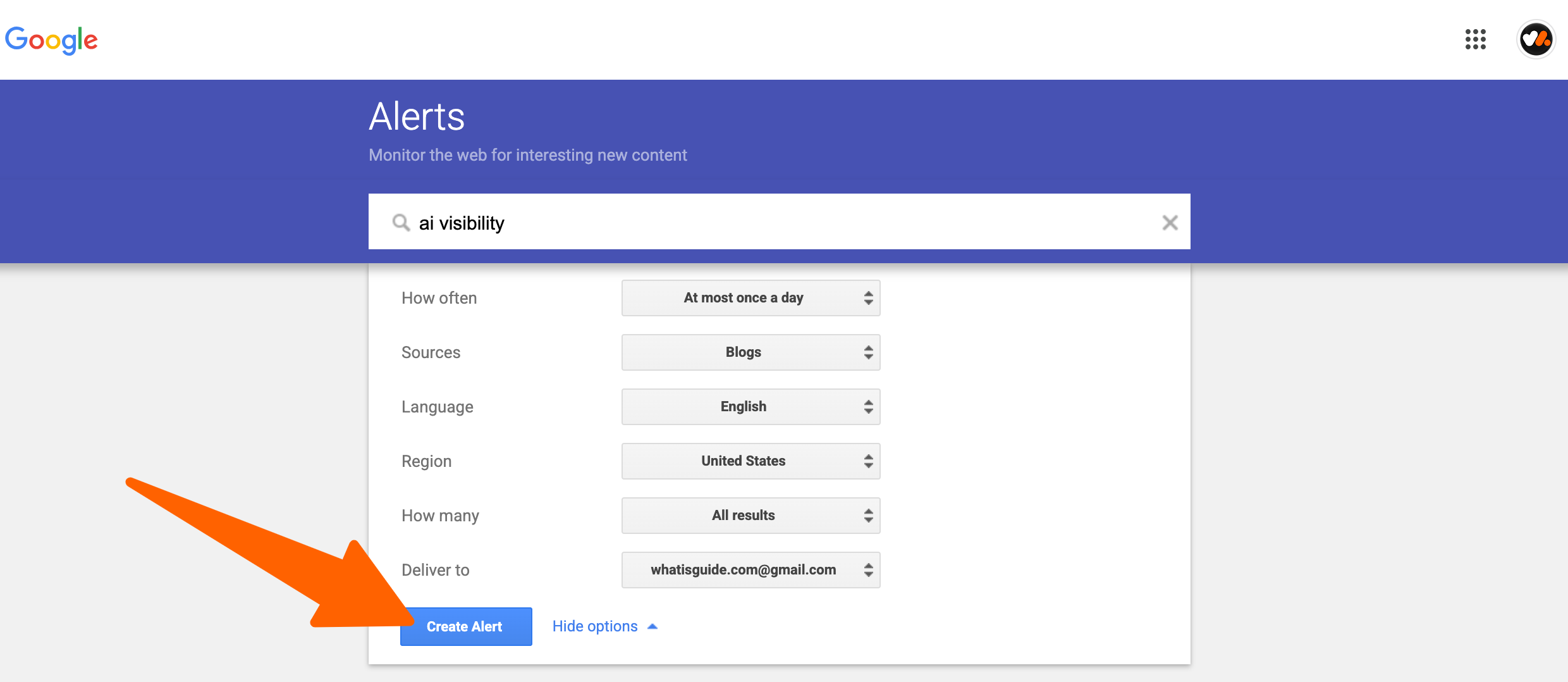
Start with Google Alerts if your budget is zero.
If you want a low-cost solution that helps you monitor both brand mentions and your visibility, Ubersuggest AI Visibility with ChatGPT is Gemini is worth testing first.
You might discover that your brand is doing much better or much worse in AI search than you expected.
When you are used to this tool, you can go with Semrush to focus on more growth. In my opinion, start small, focus on 1-2 channels at first; otherwise, you won’t be successful.
Method 2 – Watch Review Sites & Forums
This is where the real conversations happen. Not on your testimonials page. Not in your email inbox.
I’m talking about Reddit threads, Quora answers, GitHub discussions, industry forums, review sites, and niche communities.
These are the places where people say exactly what they think about your brand with no marketing filter attached. And that’s why they’re so valuable.
When someone is considering a product or service, they often trust a Reddit thread more than a polished landing page.
I’ve seen users search for terms like “Brand X reviews Reddit” before purchasing because they want honest opinions from real people.
If you’re not monitoring those conversations, you’re missing some of the most important brand signals on the internet.
Semrush’s Media Monitoring app can help by bringing those discussions into one dashboard.
It can show you:
- Total mentions and your overall brand presence score
- A complete list of mentions across supported platforms
- Sentiment analysis for each mention
- Reach and visibility metrics
- Trend reports showing whether brand conversations are increasing or declining over time
This makes it much easier to spot patterns.
For example, if you suddenly notice a spike in negative mentions for your WordPress plugin or Saas tool, you can investigate before it turns into a larger reputation issue.
Likewise, if people keep recommending your brand in specific communities, you’ve just identified a channel worth investing more time in.
But here’s the part I think most businesses get wrong. They treat brand monitoring as a reporting exercise. It isn’t. It’s a participation exercise.
If you discover a negative Reddit thread about your brand, don’t just log it in a spreadsheet and move on.
- Join the conversation.
- Answer questions.
- Clarify misunderstandings.
- Offer help when appropriate.
A thoughtful response from a real person can completely change how potential customers view your business. I’ve seen brands turn frustrated users into loyal advocates simply because someone took the time to respond.
And from a broader SEO perspective, active engagement creates stronger brand signals across the web. It shows that your company isn’t just being talked about; it is participating in the conversation.
That’s the difference between monitoring your reputation and managing it. The brands that win online do both.
Method 3: Mine Your Backlink Profile
This is the method almost nobody talks about, which is exactly why you should pay attention to it. Most people use backlink tools to count links, check authority scores, or spy on competitors.
I use them for Brand signals. Here’s how:
- Open Semrush’s Backlink Analytics tool and enter your domain.
- Generate your backlink report,
- then head to the Anchor Text section and filter for your brand name.
What you’ll find is a list of websites linking to you using branded anchor text. These aren’t random backlinks. They’re websites that specifically chose to reference your brand by name.
That’s a strong trust signal.
Think about it from Google’s perspective. When authoritative websites repeatedly mention and link to your brand name, Google starts associating your brand with a specific topic, industry, or area of expertise.
Over time, those signals compound. Your brand becomes easier for Google to recognize. Your authority becomes easier to validate. And your chances of being viewed as a trusted entity increase.
I always recommend paying close attention to where these branded links are coming from.
Ask yourself:
- Which websites mention my brand most often?
- Which industries are talking about me?
- Are there high-authority sites I could build a stronger relationship with?
- Are competitors earning more branded mentions than I am?
You’ll often discover opportunities hiding in data you’ve already collected. And unlike many link-building tactics, branded mentions tend to age well.
As your brand grows, those signals continue reinforcing your authority over time.
Method 4: Set Up Google Alerts (Free)
Let me clarify to you that Google Alerts isn’t the most advanced solution.
- It doesn’t provide detailed sentiment analysis.
- It won’t show you social media conversations.
- And it doesn’t offer the in-depth reporting you’ll find in dedicated brand monitoring platforms.
But it has one major advantage. It’s free. And for many businesses, that’s enough to get started. Setting up Google Alerts takes about five minutes.
Create alerts for:
- Your brand name
- Common misspellings of your brand
- Product or service names
- Key executives or public-facing team members
- Industry phrases commonly associated with your business
Whenever Google discovers new content matching those terms, you’ll receive an email notification. What I like about Google Alerts is that it helps you stay aware of new opportunities.
You might discover:
- A blog mentioning your brand that could become a backlink opportunity
- A journalist covering your industry
- A customer recommending your business
- A review or case study featuring your product
- A discussion where people are actively looking for solutions you provide
Google Alerts won’t do the analysis for you. But it will keep you informed and help you spot valuable conversations before your competitors do.
If you’re just getting started with brand monitoring, I recommend setting up alerts today and letting them run in the background.
Then, as your business grows and brand visibility becomes more important, move to a dedicated monitoring platform that can track sentiment, social conversations, AI visibility, and brand mentions at scale.
The biggest mistake isn’t choosing the wrong tool. It’s not monitoring your brand at all. Start somewhere. You can always upgrade later.
What to Do Once You Find a Brand Mention

Finding brand mentions is only the first step. What actually moves your needle is what you do after you find them.
I’ve seen companies invest in monitoring tools, collect hundreds of mentions, and then do absolutely nothing with the data. That’s a wasted opportunity. In most cases, you’ll come across one of three situations.
1. You Find a Negative Mention
Don’t panic. And definitely don’t ignore it. A negative mention is often an opportunity to demonstrate that your brand listens and responds.
Take the time to understand the concern, acknowledge it, and offer help if appropriate.
For example, someone posts on Reddit saying that a WordPress backup plugin failed during a website migration. Instead of staying silent, you respond publicly, ask for details, explain possible causes, and offer support resources.
Anyone reading that thread now sees two things:
- The customer had a problem.
- The company showed up to help solve it.
That’s often more powerful than dozens of generic five-star reviews because it demonstrates accountability in a real-world situation.
In many cases, a well-handled complaint can build more trust than a glowing review because it shows there are real people behind the brand who care about customer experience.
I’ve seen public responses turn frustrated customers into loyal advocates simply because someone took the time to engage.
2. You Find an Unlinked Mention
This is one of my favorite opportunities. Someone has already mentioned your brand.
- They know who you are.
- They found your brand valuable enough to include in their content.
- But they didn’t add a link.
That’s often one of the easiest link-building opportunities you’ll find.
For example, let’s say a blogger publishes an article titled “Best Virtual Tour WordPress Plugins” and mentions your plugin as a recommended solution. They talk about its features and benefits, but they never link to your website.
That’s an unlinked brand mention. The hard part is already done. The author knows your brand, likes your product, and decided it was worth mentioning.
All you’re doing is making it easier for their readers to find you. Reach out with a short, friendly email. Something as simple as:
“Thanks for mentioning our virtual tour plugin in your article. We really appreciate it. If it helps your readers, here’s the official page where they can learn more.”
You’re not asking a stranger for a backlink. You’re contacting someone who has already shown interest in your brand. That’s why these outreach campaigns often perform better than traditional cold link-building.
I’ve found that many website owners are happy to add the link because it improves the user experience for their readers. They simply forgot to include it in the first place.
And I am telling you it is the most beneficial and low-effort task, as a single unlinked mention can often turn into a high-quality backlink with just one email.
3. You Find a Positive Mention on an Authoritative Website
Most people see the mention, smile for a second, and move on. Don’t ignore it at all.
Positive brand mentions are valuable marketing assets. When a respected website, industry publication, or community recommends your brand, make the most of it.
For example, you run a saas tool that can create a portfolio website for free, and a popular website builder published an article on the best platforms for building an online portfolio.
The author recommends Carrd, Wix, and your platform (oidcard) as one of the top choices for freelancers and creatives.
That’s not just a nice mention. It’s third-party validation. A trusted source has already done the research and decided your platform deserves a spot on the list.
Anyone reading that article is far more likely to trust your brand because the recommendation comes from an independent website rather than your own marketing.
Now here’s where many companies miss an opportunity. They see the mention, celebrate for a moment, and move on. Instead, turn it into a growth asset.
You could:
- Share the article on social media
- Add the quote to your homepage
- Feature it on your testimonials page
- Include it in email campaigns
- Reference it in sales materials
- Add it to a “Featured In” section on your website
A positive mention already comes with credibility attached to it. Your job is to amplify that credibility wherever possible.
The more often potential customers see trusted websites recommending your portfolio website creator, the easier it becomes to build authority, earn trust, and attract even more customers.
The Bigger Lesson

Brand monitoring isn’t a one-time SEO task. It’s an ongoing habit.
I recommend setting aside 20-30 minutes each week to review your monitoring dashboard, check new mentions, and take action where needed.
That small investment of time can uncover backlink opportunities, reputation insights, customer feedback, partnership opportunities, and content ideas that would otherwise go unnoticed.
The brands that consistently grow aren’t necessarily the ones with the biggest budgets. They’re the ones paying attention to the conversations happening around them and acting on what they learn.
That’s where brand monitoring becomes a competitive advantage.
Conclusion
Brand mentions aren’t just a nice-to-have anymore. They’re one of the signals Google uses to understand whether your brand is trusted, recognized, and worth showing in search results.
The good news is that tracking them doesn’t have to be complicated. Whether you use Google Alerts, Semrush, or another monitoring tool, the important thing is to start paying attention to who’s talking about your brand and what they’re saying.
If you also want to see how visible your brand is in AI platforms like ChatGPT and Gemini, I recommend checking out Ubersuggest’s AI Visibility feature.
It can help you understand whether AI tools are mentioning your brand, your competitors, or neither. It gives you a clearer picture of your overall online visibility.
** FAQs **
1. I just started my business. Do brand mentions even matter at this stage?
Yes, and this is actually the best time to start paying attention. When your brand is new, Google has almost no data about you, so every mention helps build credibility from scratch. Don’t wait until you’re big; even small mentions on niche forums or local directories start telling Google you’re a real, trustworthy business.
2. Someone mentioned my brand negatively online. Should I respond or just leave it?
Always respond; ignoring it is the worst thing you can do. A negative mention with no reply signals to Google and potential customers that nobody’s behind the brand, but a genuine, helpful response actually builds trust.
3. What’s the difference between a brand mention and a backlink?
A backlink is simply a brand mention that includes a link. A brand mention is broader than that.
4. How do I know if a brand mention is actually helping my GEO or just noise?
You should first check your content quality and competitors. Then update your page with better information and optimization. This helps you recover and improve rankings again.
5. I Googled my brand and found nothing. Does that mean no one is talking about me?
Not necessarily, and this is exactly why manual searching fails you. Google only surfaces a fraction of what’s out there, and conversations on Reddit, review platforms, niche forums, and YouTube comments often won’t appear in a basic search. Set up Google Alerts as a minimum, so you stop flying blind.